Nothing interesting ever happens in an airport. Except in Cuba.
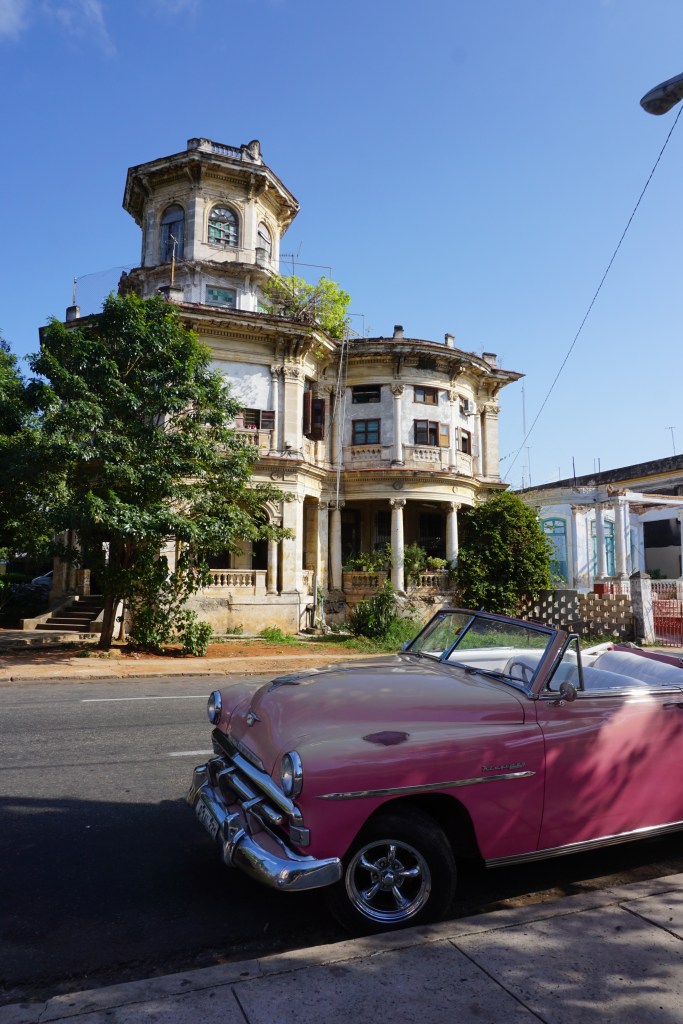
On March 25, 2017, I boarded a plane in New York City and three hours later, I walked off that same plane into an airport hangar in Havana in 1961. Behind me, my husband Todd winced at the Caribbean heat. This baking linoleum limbo with its lines of tourists at customs was the final threshold we had to cross before five days of adventure. Ready to embark but also needing to find some patience and some shade, I closed my eyes and inhaled. A sudden swirl of familiar rolled over me.
Sunbaked dirt and concrete.
Coffee and caramelizing sugar.
Zinc oxide and a towel, damp after a swim in the ocean.
The smells sent me time traveling again; this time, forward from 1961 to Louisiana circa 1992 and into my own memories… of the bubbling fountain in my grandmother’s walled garden, of my grandfather’s rapid-fire Spanish, of the taste of savory black beans and roast pork. I had been standing in Cuba for about seven minutes and was experiencing something like my life flashing before my eyes.
“Todd, this place smells familiar,” I said.
“The airport?” he answered.
Fifty-eight years had elapsed between the time my mother Carmen left Cuba and I arrived there. When she left at the age of seven in May 1959, she thought she was going on vacation with her parents and younger siblings to the United States. She never went back. When I arrived at the age of 37 in March 2017, I thought I was going on vacation to see a place that, although my mother was born there, I knew very little about.
For most of my life, I had no clue what it meant to be Cuban. Sometimes it felt like a parlor trick – “watch the girl from South Carolina order café con leche!” – or an uncomfortable stereotype – “check the box for Hispanic on your college application and get some scholarship money,” knowing that the jig would be up as soon as anyone asked me to count to twenty.
Growing up in South Carolina, having Cuban heritage meant that I was different, and I understood without being told that it was important NOT to be different. I was pretty young when I found myself on a merry-go-round of questions that were never answered, only added to over the years: why is it so bad to be different? Why don’t I speak Spanish? Isn’t there more to Cuba than coffee, Castro, communism? Cuba was like a puzzle I was trying to put together. Pieces connected over time, but I never EVER thought to call myself “Cuban” or “Cuban American.”
When I was seventeen, I moved from South Carolina to New York City for college, and I never went back. Those early years in New York were an odyssey for me as I transitioned away from a colloquial Southern home and settled into a big city life all on my own. I found myself hypnotized by the City’s vibrant cultural diversity and drooling over the gastronomic amusement park that is New York. Food was my favorite way of exploring new cultures and meeting new people, and Cuban food was high on the list of things to try since my mother never made it at home. My grandmother did, and she was such a good cook that I could be dangerously judgmental in Cuban restaurants.
The high concentration of arroz con pollo in my system vented out through my pores and worked like a pheromone to attract other second-generation Cubans to me. They were everywhere: classmates, colleagues, fellow writers, artists, filmmakers, athletes, neighbors, everywhere. Once we knew we had Cuba in common, it was like I had been reunited with a long-lost friend. The biggest, and most bewildering, response I ever got was a full-on bear hug and a jubilant shout, “Oh you’re Cuban? That explains a lot!” Good, I guess? These were people whose lives and identities were shaped by Cuba in ways that mine was not, and they were among the first people to tell me that I too was Cuban and needed to be proud of that.
That was it for a while. Then my grandfather passed away, and a few months after his funeral, one of my Cuban friends asked me, “Have you ever been to Cuba?”
WHAT?! NO, was my kneejerk reaction. Until then, I thought I would go to the moon before I went to Cuba. I couldn’t picture it as a real place. No one in my family ever expressed a desire to go. Abuelito would probably kill me, but he was already gone. So I gave into my curiosity and said back to her, “No, have you?”
She laughed and said, “Yes!” and she described a visit to family in Havana that sounded like my visits to Louisiana to see my extended Cuban family.
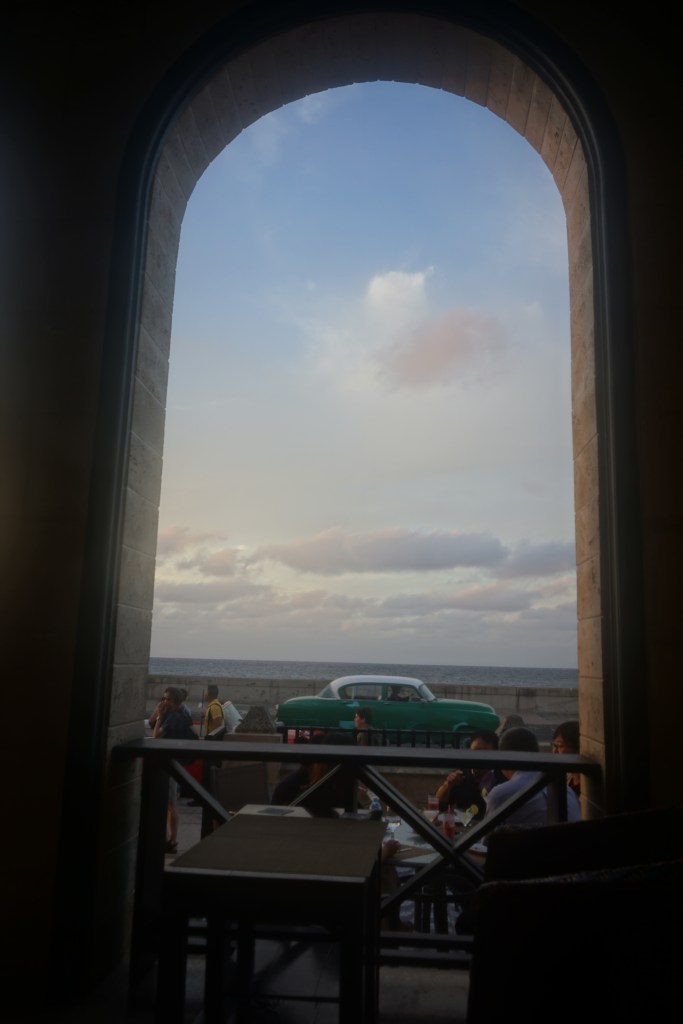
I visualized myself standing on the Malecon in Havana and thought Hmmm… one day.
But it was still easier to hide behind travel restrictions, embargo red tape, and life busyness until the Obama administration rolled back travel restrictions for Americans going to Cuba. Suddenly, it was THE place to go. Everyone I knew and their brothers were hopping on cruise ships and planes bound for Havana. They spent a few days riding around in 1950s vintage cars, drinking mojitos, and smuggling cigars. I listened to so many people describe how their cruise ship docked for a few hours in Havana before moving on to the next Caribbean playground.
These stories pissed me off. I wanted to shake them hard and scream that Cuba wasn’t a sideshow on display to be pasted across Facebook. I didn’t want to admit to myself that these selfie-stick wielding idiots knew more about Cuba than I did because they let a cruise ship take them there. So, what the hell, why not join the casual ranks of tourists and hop on that three-hour flight from JFK to Havana? The worst-case scenario was I’d come home and everything would be the same; I would still not speak Spanish and I would still feel squeamish calling myself Cuban American. I had convinced myself that I was so un-Cuban that the best thing a visit to Cuba would give me was the right to say that I had been.
But as soon as Todd and I arrived, I felt Cuba inviting me in, just as I always felt invited into my Cuban grandparents’ house when we visited. In one of those weird ways in which my family was Cuban but also not Cuban, we called my grandfather Abuelito and my grandmother Grandma. Their house was arranged around a garden that my grandma meticulously tended with an elegant brick koi pond and bubbling fountain in the middle. You couldn’t see the garden or the gate to enter it from the street. After a two-day car ride, I would pull myself out of the car and strain my ears for the sounds of the fountain. I would scurry to the gate and Grandma would appear. On one visit, she wore a bright floral dress and casual espadrilles. She looked like a magical garden fairy, skipping towards us with youthful grace, opening the gate, kneeling and throwing her arms open to give me a big welcoming hug.
“Barbara!” she exclaimed, pronouncing my name as she always did with three syllables.
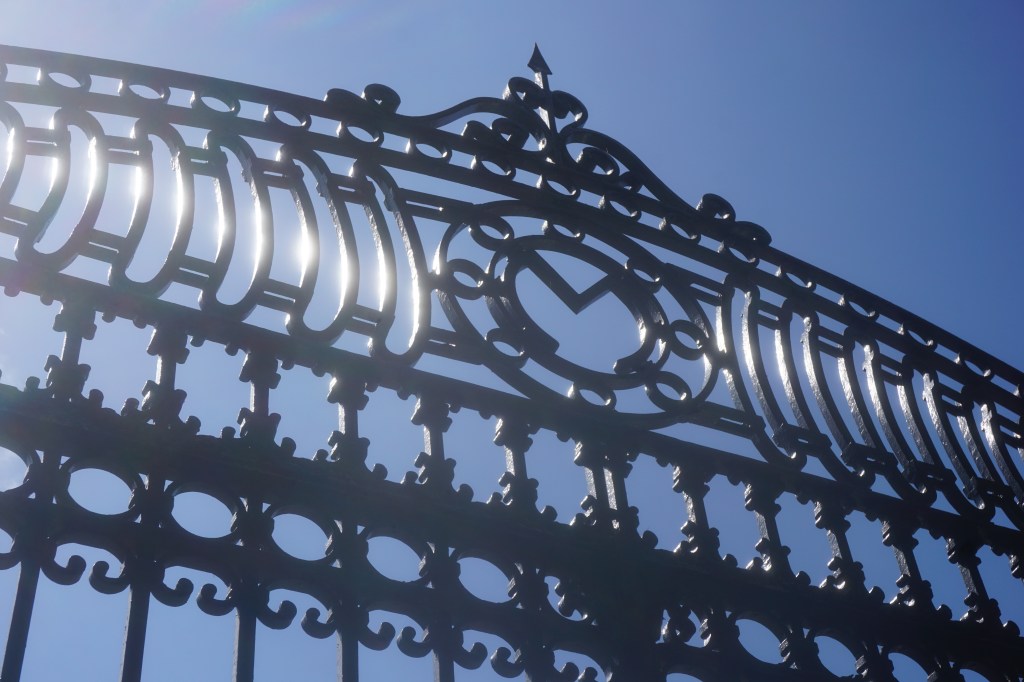
That was exactly how Cuba welcomed me, skipping towards me, arms wide open, opening the gates, and letting me in to a secret place. Cuba did not see me as a rank-and-file tourist with a camera and sensible shoes. Cuba recognized me and accepted me as one of her own. This foreign place, this enemy territory, this embargoed land was just suddenly… home.
 Barbara Caver, Author